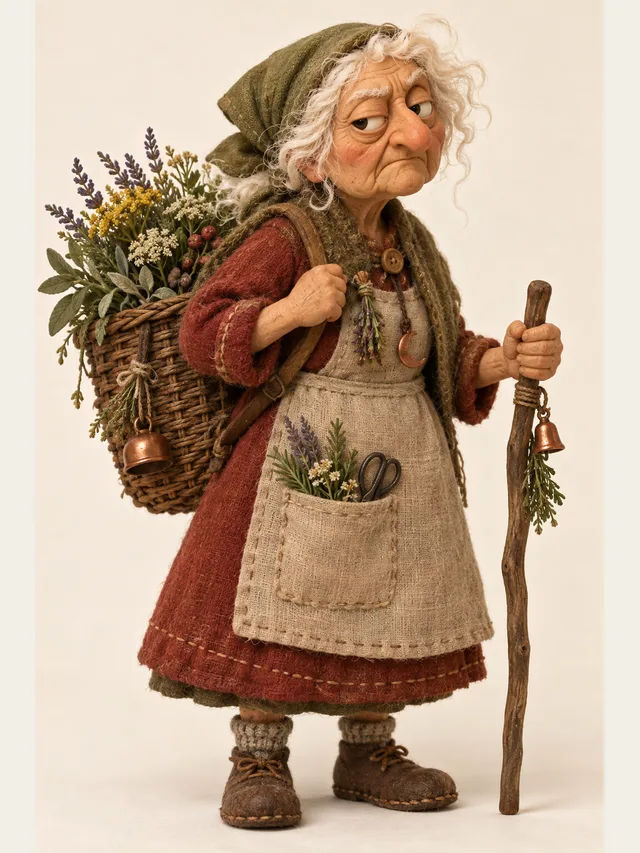
Mabel
More herbs than hexes, very tired of adventurers
Voice category
There are three witches in fiction and they sound nothing alike: the practical village one, the fairy-tale threat, and the modern one who is simply a person with opinions. Pick the one you actually wrote, and the casting becomes easy.
Mabel
More herbs than hexes, very tired of adventurers
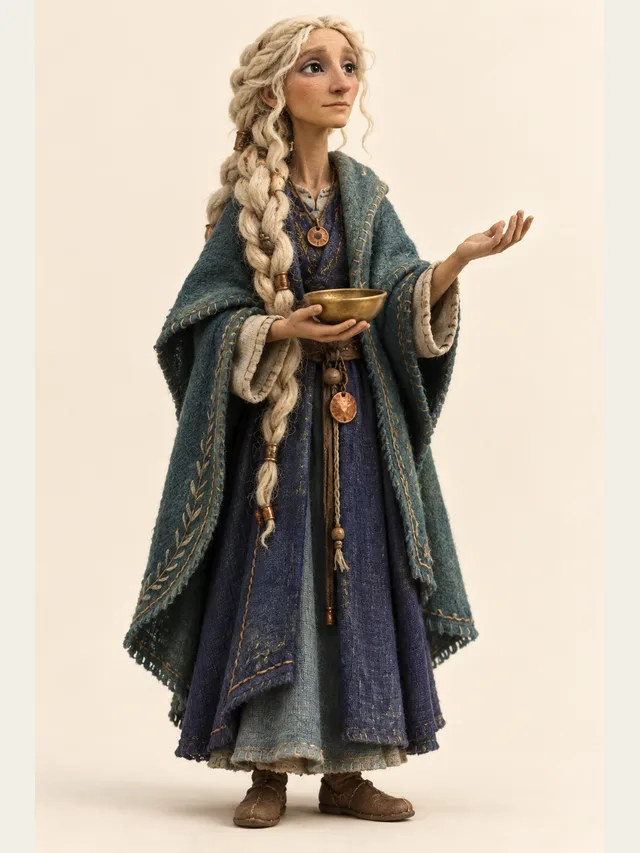
Delphi
Answers the question you should have asked
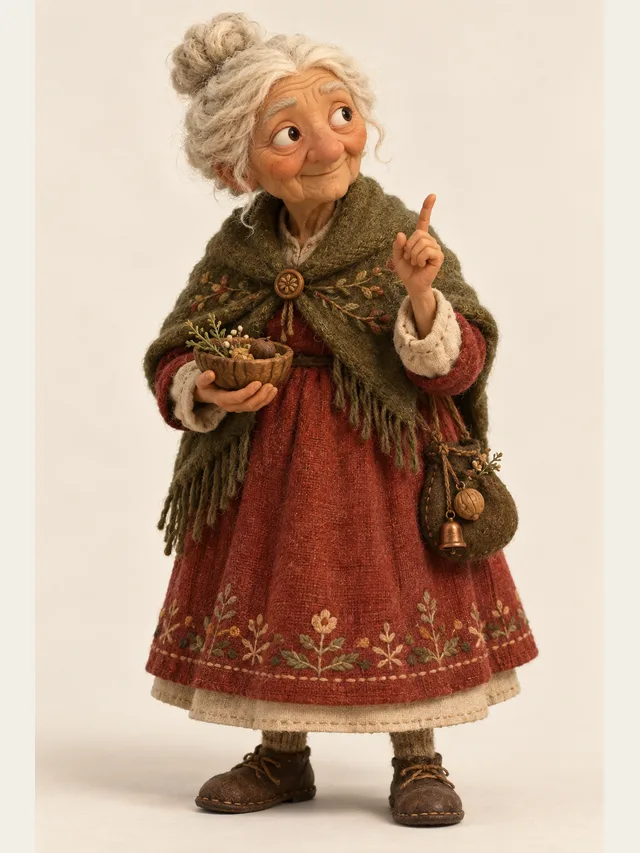
Gran Thea
Folk tale told by someone who half believes it
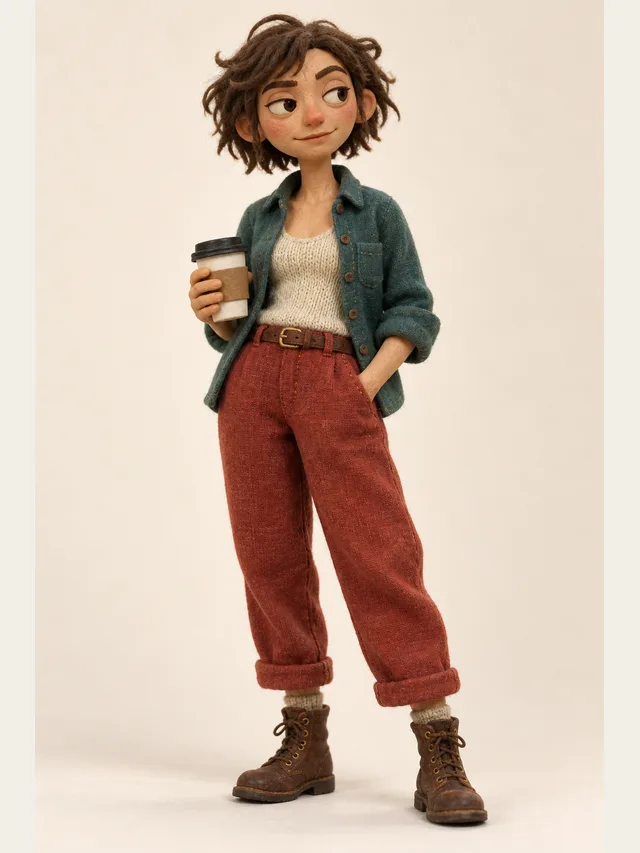
Tess
The modern one, flat delivery, unimpressed
Every voice is available on every plan — the library is not a paywall.
The practical witch is a professional. She has a workshop, a waiting list and a strong opinion about people who arrive at night without an appointment. The register is dry, unhurried and slightly impatient, and it works because the audience recognises competence — this is a person whose expertise is real and whose time is being wasted. A flat, senior, faintly amused voice carries it without any direction.
The fairy-tale witch is a threat wearing hospitality. Everything about the delivery is warm and the content is not, and the whole effect depends on the warmth never breaking. This is the hardest of the three to cast because the instinct is to reach for something sinister, which destroys it immediately.
The modern witch is simply a person. She has a job, a group chat and a practice that she talks about the way other people talk about running. The voice should be entirely ordinary — flat, contemporary, unimpressed — because the story is usually about the collision between the ordinary voice and the extraordinary situation.
The single best move available when writing a witch is to make her right about something specific. Not mystically right — factually right, about a plant, a season, a debt, a piece of local history that the visitor did not know. Specific knowledge delivered confidently is what separates a character from a costume, and it is also what gives a synthetic performance something solid to work with.
Vagueness, conversely, is where these scenes die. Lines about fate, balance and the old ways arrive as undifferentiated portent, and a renderer performs them exactly as flatly as they are written. If you cannot say what the character actually knows, the audience cannot either.
A practical structure: let her answer the question that was not asked. The visitor wants a love charm; she talks about the cost of the visitor's last decision. It creates the impression of someone operating several steps ahead, it produces natural pauses, and it requires no directing at all.
Incantations are the most common failure on this page and the most avoidable. A renderer guesses at unfamiliar spellings, and there is no dictionary, no phonetic field and no per-word override — the only tool you have is how you write the word. That is less limiting than it sounds, provided you treat it as a real step rather than an afterthought.
The pass is quick. Put the incantation in as its own line, generate it, and listen word by word. Where the stress lands wrongly, hyphenate to split the compound. Where a vowel is read short and you wanted it long, double the letter or add a silent e. Where nothing helps, change the word — you invented it, and nobody is checking.
Then freeze the spelling. Write the corrected version into your notes and use it in every scene and every episode, because a project does not carry any pronunciation memory between sessions and the only consistency you get is the consistency you enforce in the text.
Witch scenes have a fixed shape: somebody wants something, and somebody who can provide it would rather not. That structure needs both halves rendered together, because the entire performance is about who is comfortable and who is not. The visitor's hurry is what makes her slowness read as power; her slowness alone is just a slow voice.
Cast the visitor as the opposite of her in pace and pitch. If she is low, dry and unhurried, make them quick and bright. On the free plan a project holds two cast members, which is precisely enough for this scene; Basic holds five if a familiar, an apprentice or a second customer is involved.
One last thing worth listening for: the ending. The strongest version of this scene is the one where she gives them exactly what they asked for, delivered in the same tone as everything else. Generate that final line a few times — each take is slightly different, and the one where the tone does not change at all is the one to keep.
Practical, fairy-tale or modern. They need different voices and different writing, and mixing them inside one character is the reason most witch scenes feel unfocused. Decide which story you are telling, then cast for it.
It is a caricature, it ages badly, and it is also one of the non-verbal sounds a renderer will not produce on request. Dryness does the same job better: a flat, faintly amused delivery of something alarming is funnier and more menacing than any laugh.
Witches in good fiction know things. Two specific, confident details about a plant, a debt or a season sell the character more thoroughly than any amount of tone, and they give the voice something concrete to perform.
Invented language needs a listening pass per word, and there is no pronunciation setting to fix what comes out wrong — only respelling. Four invented words that you have checked beat a whole page you have not.
Witch scenes are two-handers, almost without exception. Cast the person who came to ask for something and generate the exchange together; the character only becomes interesting in relation to whoever needs her.
No, and the modern register — a competent adult with no theatrics — is currently the most common in published fiction. Age is a casting choice, not a genre requirement. The senior library characters carry the folk-tale version beautifully; the dry, flat, modern ones are better for anything set after about 1950.
There is no pronunciation override, so the workflow is audition and respell. Generate the incantation, listen to each invented word, and rewrite the spelling — hyphenating to split compounds works particularly well — until it reads the way you intended. Then use that spelling everywhere in the script so it stays consistent between scenes.
An oracle speaks to be recorded; a witch speaks to be understood. The oracle register is ceremonial, unhurried and often whispered, and it works in short pronouncements. The witch register is conversational even when the content is strange, which is why a dry delivery serves it better than a mystical one.
That is the folk-tale register, and it is the most useful thing on this page. Cast a genuinely warm voice — the kind that reads a story to a child — and give it appalling content delivered without any change in tone. The gap does all the work, and it needs no emotion direction at all.
You cannot choose one. In English, library characters carry a British, American or Australian delivery that comes with the character rather than being something you set, and in the other eight languages the performance is in that language's general standard form with no regional option. Carry the folk feeling through vocabulary and rhythm instead, and never through phonetic spelling — that produces mispronunciation, not accent.
Yes. Characters in one project are kept on different base voices until the pool for that gender runs out, and a project supports up to ten distinct voices, so a coven of three or four will sound clearly separate. Beyond that, split them by pace and sentence length as well, because a chorus of similar registers blurs quickly.
Paste a script, let CastDub assign a voice to every character, and export a finished drama.
Create for freeNo credit card. Free gives you a one-time pot of credits.