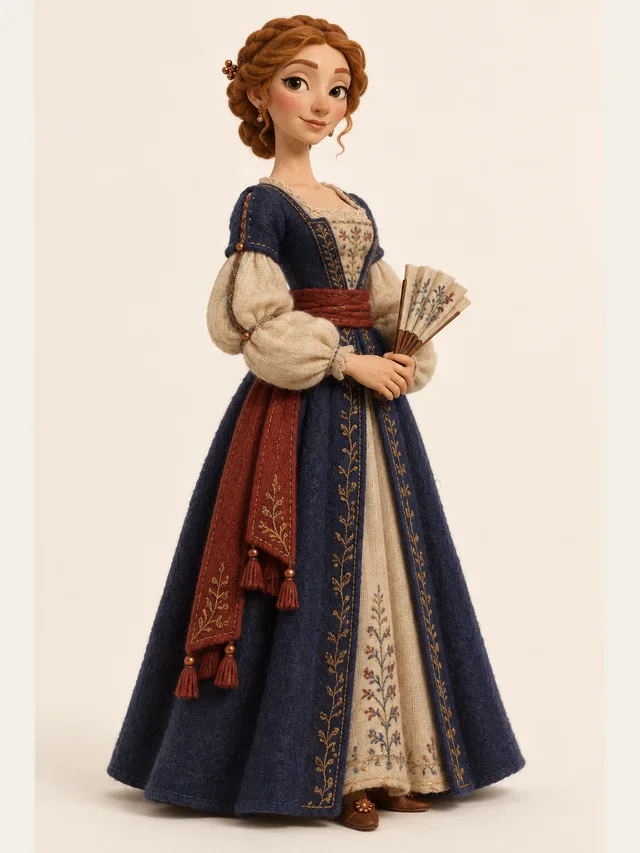
Seraphine
Court noble whose politeness is a weapon
Voice category
A princess voice is a register, not a personality. Poised, precise, trained to be heard — which leaves plenty of room for the character underneath to be anything at all, including furious about the whole arrangement.
Seraphine
Court noble whose politeness is a weapon
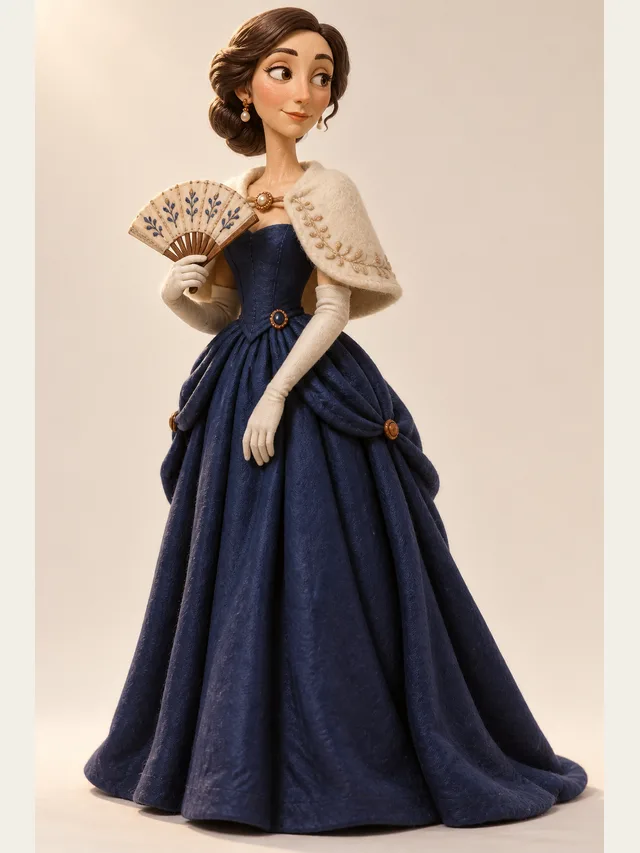
Solène
Unhurried, elegant and very expensive sounding

Delphi
Ceremonial and slightly unearthly

Aria
The princess who would rather be fighting
Every voice is available on every plan — the library is not a paywall.
Ask for a princess voice and most tools give you sweetness. That is a costume, not a character, and it collapses the moment the script requires her to do anything difficult. What actually reads as royal in audio is training: the sense that this person has been taught to speak in public since she could walk, and that the speaking is a skill she deploys rather than a mood she is in.
Training shows up as three concrete things. Consonants are finished rather than swallowed. The pace does not accelerate under pressure. And there is a fractional pause before the important word, because someone taught her that emphasis is placed, not shouted. None of those are personality traits, which is exactly why the register accommodates a warm princess, a cold one and one who is barely holding on.
Before you audition a single voice, look at the sentences. "I need you to go" and "I would ask that you leave us" are the same instruction, and no amount of casting will make the first one sound courtly. Formal register in English is mostly three moves: avoid contractions, prefer the longer verb, and put the request at the end of the sentence rather than at the start.
Once the writing is doing that work, the voice has something to perform. This matters more in synthetic performance than in human performance, because a renderer takes the text at face value: it will not add ceremony that the words do not contain, and it will not rescue a line that reads like a text message.
It also gives you a free tool for characterisation. If the whole court speaks in complete clauses and your princess drops into plain speech twice in a scene, the audience learns precisely when she stops performing — and you did not have to direct anything at all.
Rank is comparative. A princess sounds royal because of how the herald addresses her, how the guard answers, and how the visiting rival almost does. Rendering her lines in isolation and assembling them later loses all of that, because you never hear the exchange and cannot tell whether the balance is right.
So build the scene with its ensemble: the person who defers, the person who does not, and ideally one person who is her equal. Free projects hold two cast members, which is enough for the confrontation at the heart of a scene; Basic holds five, which covers most court scenes; Plus and Pro remove the cap entirely. A project draws on at most ten distinct base voices, so very large courts will have attendants who share a voice — give those lines to characters who never speak to each other.
One practical note on ensembles: a character added later does not disturb the voices already assigned, so you can start with the two people who matter and add the court around them without re-rendering what you already liked.
Two habits date a royal character immediately. The first is archaic vocabulary used as decoration — thee, thou, verily — which nearly always produces stilted audio and mispronunciation, since there is no way to override how an unusual word is read. If you want the archaic feel, get it from sentence structure and from what the characters refuse to say, not from vocabulary.
The second is making poise the entire personality. The register is a surface; the drama is underneath it. The most effective royal scenes in audio are the ones where the formal delivery is visibly costing the character something, and that is a writing decision you make before you ever open the voice library.
If you are unsure whether a scene is working, listen to it with the leads swapped. If the imbalance is still audible when the wrong person is speaking politely, the writing is carrying it, and the casting is free to be interesting rather than merely correct.
Royal characters are either performing the role or resisting it, and that single choice sets the voice. The one who is performing is precise and unhurried; the one who is resisting is quicker, plainer and keeps breaking the register. Write the decision down before you audition anyone.
Clean consonants and controlled pace read as trained, and trained is what nobility sounds like in audio. Audition on a formal line — a greeting to someone she dislikes works well — rather than on a neutral sentence, because the register only shows up under formality.
Complete clauses, no contractions, the request placed last. Most of the courtly effect is in the writing and happens before any voice is chosen; a plain-spoken line will sound plain-spoken no matter who performs it.
One informal line inside a formal register tells the audience everything about the character. Mark those lines deliberately, one or two per scene, and write them noticeably shorter than the speeches around them so the break is audible.
Royal scenes are ensemble scenes: the herald, the rival, the guard, the parent. Generate the full exchange rather than her lines alone, because the hierarchy only exists in comparison — you cannot hear rank in a monologue.
No. British-accented characters carry the convention for English-language fantasy, and several of the poised library characters are directed that way in English, but precision matters more than accent. In the other eight languages there is no regional accent to pick at all — each one is performed in its general standard form.
Yes. It is the same register, slower and with less warmth, plus a shift in what the character bothers to explain. A queen does not justify herself. Age band and pace carry nearly the whole difference, so you can often move a character from princess to queen by changing the persona note and the pacing rather than the casting.
Give her something she wants that the role forbids, and let the register strain against it. The poised delivery becomes interesting the moment the audience knows what it is holding back; without that, precision is just flatness with better manners.
Write her as young rather than as a small child. There are no true child voices in any language here — young characters are performed by adult voices directed to sound light, quick and young, the way animation has always done it. That works well for a spirited teenage royal and less well for a five-year-old.
You can keep her consistent, but you have to write the casting down. Characters exist only inside a project, so for each episode you create a new project, pick the same library character, paste the same persona and set the same default emotion. The base voice is not guaranteed to be identical in a new project, so listen to her first line before you export.
Quite different. Fairy-tale royalty is narrated more than it speaks, so the lines are short, formal and slightly archaic, and the ceremonial or unearthly voices fit better. Court drama is conversational under a formal surface, which needs a voice that can handle long sentences without losing the thread.
Paste a script, let CastDub assign a voice to every character, and export a finished drama.
Create for freeNo credit card. Free gives you a one-time pot of credits.