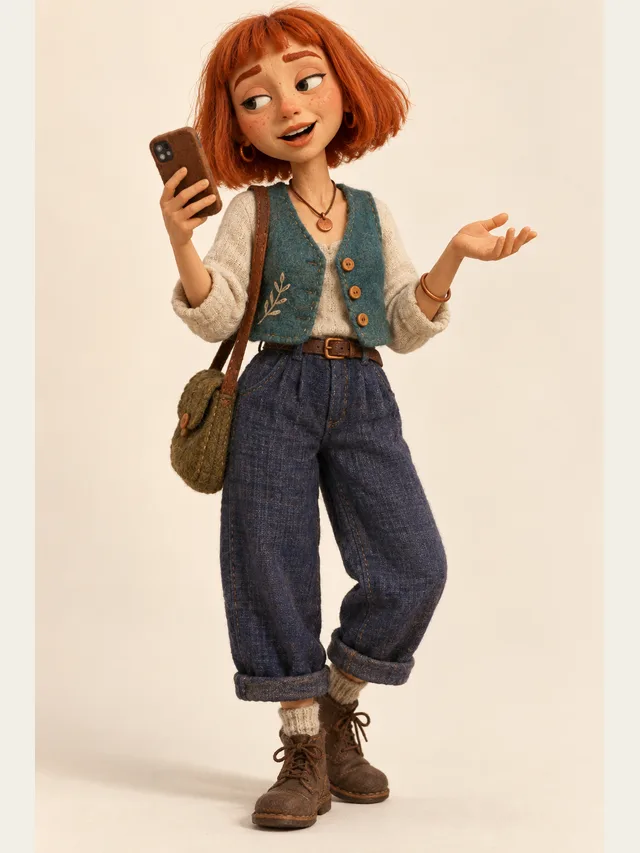
Indie
Fast, flat, faintly amused
Voice category
Short-form voiceover has two jobs: survive the first second and stay clear at high speed on a phone speaker. That rules out most atmospheric voices. These are the ones that cut through, plus the ability to give a skit two actual characters.
Indie
Fast, flat, faintly amused

Cass
For the story-time format
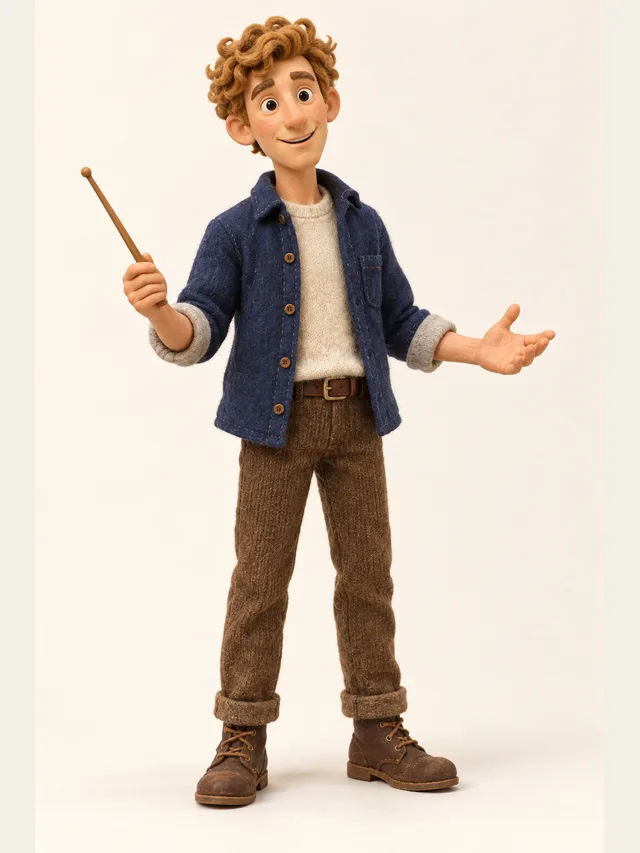
Quill
Clear explainer for how-to clips
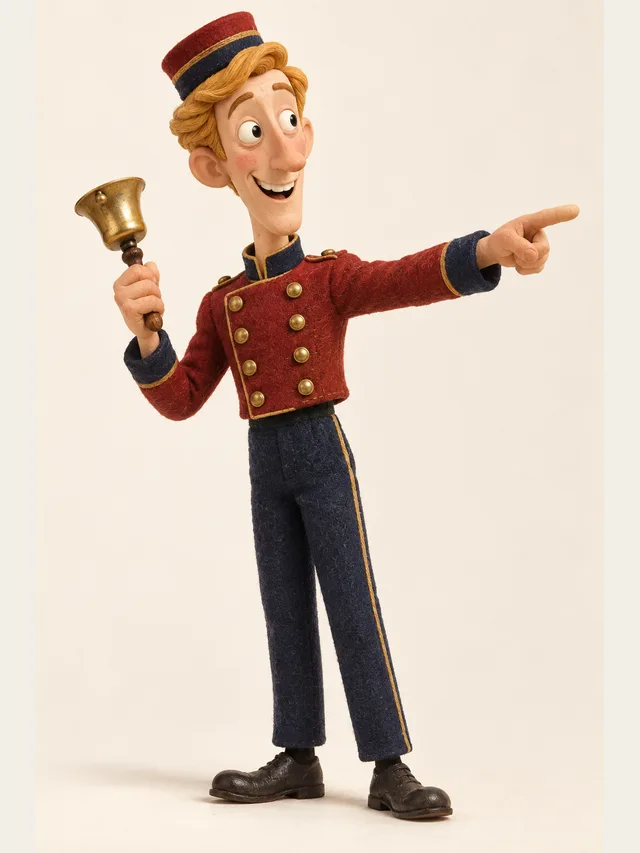
Bellhop
The other half of the skit
Samples are placeholders while the public demo audio is produced. Every voice is available on every plan — the library is not a paywall.
Short-form feeds are a continuous audition. A viewer decides whether to keep watching in under a second, usually before any picture has meaningfully registered, which puts unusual weight on the very first sound. Atmospheric openings, slow builds and branded stings all cost you the audience you were trying to attract.
In practice this means writing your first line as a complete, self-contained hook and rendering it alone to check it. If it only works after the second line, it does not work.
Most short-form video is watched on a phone speaker at moderate volume, often in a noisy environment. Those speakers reproduce almost nothing below a few hundred hertz, which means the entire aesthetic of deep, warm, cinematic voices simply does not exist for that audience.
The voices that work are midrange-forward and articulate — the ones that might sound thin on studio headphones. This is one of the few situations where auditioning on bad equipment is the correct methodology.
Skits, reaction formats and dramatised conversations consistently outperform straight narration in short form, and they are exactly what a single-voice tool cannot produce. Writing both halves of an exchange and casting them separately takes a couple of extra minutes and changes what kind of content you can make at all.
It also helps with pacing. A cut between two voices carries the same attention reset as a visual cut, and short-form audiences are trained to expect a change every few seconds.
A large share of short-form playback starts muted, and a meaningful share stays that way. Burned-in captions are therefore not an accessibility nicety but the primary delivery channel for your script.
Generating captions from the script rather than transcribing them from audio means names, slang and product terms are spelled correctly, which is where automatic captioning reliably fails. Get the timing file from the render and burn it in at whatever size your editor prefers.
Short-form platforms measure whether a viewer stays through the first loop, and the reliable way to hold them is change — a new shot, a new idea, a new voice. Of those three, a new voice is the cheapest to produce and the least used, because most creators only have one.
A two-character exchange, even four lines long, resets attention in the middle of a clip where a single narrator would have lost it. This is why reaction formats and dramatised conversations outperform straight narration so consistently in this format, and it is a structural advantage rather than a stylistic preference.
Sixty seconds is about 160 spoken words at a brisk pace. That is a paragraph, not an essay, and the most common failure in short-form scripting is trying to fit a long-form idea into it by speaking faster.
Speaking faster does not add information; past a point it removes it, because listeners stop parsing. The correct move is to cut the idea down to the one thing that fits, which almost always makes the clip better as well as shorter.
A useful discipline: write the script, count the words, and if it is over 160 for a sixty-second clip, delete rather than accelerate. Your pace setting should be the last thing you reach for, not the first.
Write the first sentence as if it is the only one anyone will hear, because for most viewers it is. Then render it on its own and check it lands cold.
Phone speakers reproduce very little bass. Bright, midrange-forward voices cut through; deep atmospheric voices disappear entirely.
Short-form delivery runs faster than normal narration. Push the pace until consonants start to smear, then step back one notch.
Two-character skits are among the highest-performing short formats and are trivial here — write both parts, cast both, render once.
Most short-form viewing is muted at first. Burned-in captions from the same script are non-negotiable, and they are already in sync.
No, and nobody legitimately can — that voice belongs to the platform and cloning it would be both a terms violation there and a policy violation here. What you can do is pick a voice with a similar bright, fast, neutral register, which is what actually makes that style work.
Not for being synthetic. Short-form platforms deprioritise repetitive, low-effort content, and unattributed reposts. An original script with a generated voice is not in that category.
Because you probably chose a deep voice on headphones. Phone speakers roll off everything low, so audition on a phone speaker — it is the device your audience is using and it is unforgiving.
When you stop being able to hear word boundaries. The practical test is to play it once and try to write down what was said. If you cannot, neither can a viewer who is also reading captions.
It is one of the best uses. Story time is dialogue-heavy, and casting the other people in the story as separate voices makes it dramatically easier to follow than one narrator doing everyone.
Creator covers most daily short-form schedules — sixty minutes a month is a lot of thirty-second clips. Move to Studio if you start producing multi-character series.
Paste a script, let CastDub assign a voice to every character, and export a finished drama.
Create for freeNo credit card. Free plan renews every month.