
Vex
Demon who negotiates in a perfectly reasonable tone
Voice category
Demons in fiction are negotiators. The voice that works is polite, patient and entirely certain — with just enough wrongness underneath to keep the listener uneasy about how reasonable it all sounds.
Vex
Demon who negotiates in a perfectly reasonable tone
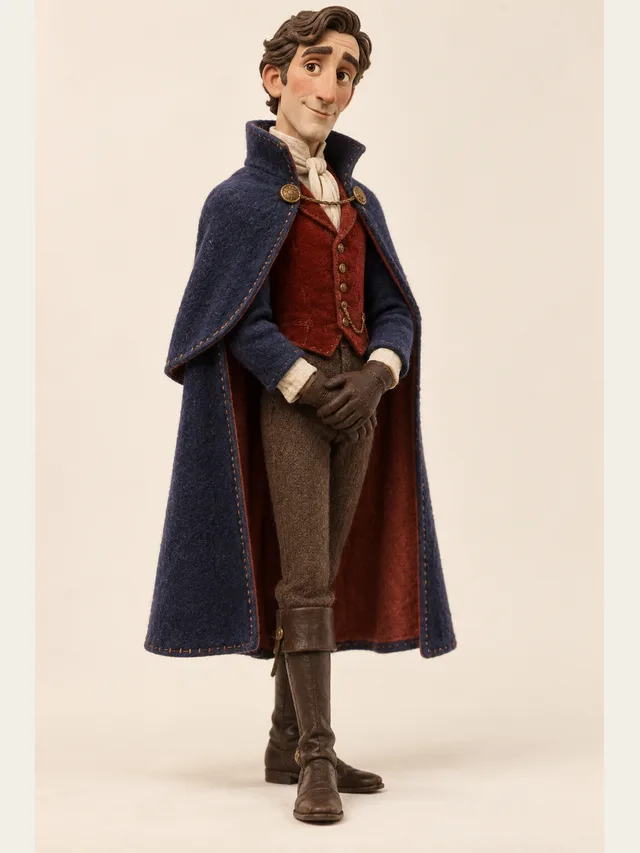
Ashford
Courteous right up to the end and slightly after

Morrow
The whisper version, already inside the house
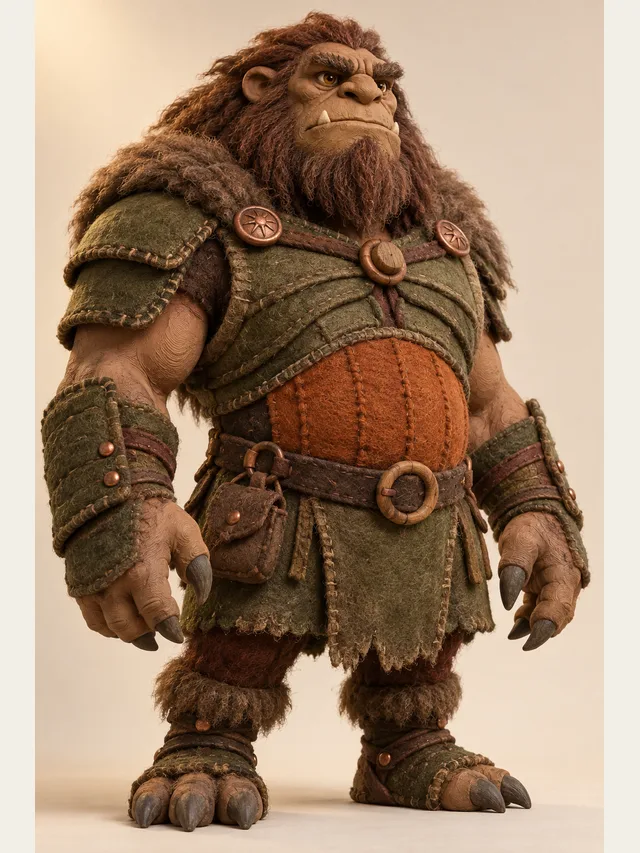
Grit
The one that has stopped pretending
Every voice is available on every plan — the library is not a paywall.
There is a reason the demon of folklore turns up in a good coat and asks a polite question. A monster wants to eat you, which is frightening in a simple way; a demon wants you to agree to something, which is frightening in a way that lasts. The entire dramatic engine of the form is consent — the character has to be persuaded, and so, by proxy, does the audience.
That engine determines the voice. Persuasion requires patience, clarity and apparent good faith, which rules out roughness and rules out volume. The most effective infernal voices in published audio are the ones you would happily listen to give a lecture, and the discomfort comes entirely from what they are calmly proposing.
An offer needs three parts to work: something the listener genuinely wants, a price that sounds smaller than it is, and a clause that is technically disclosed. The disclosure matters most. A demon that lies is just a liar; a demon that tells you the truth in a form you are not equipped to hear is the thing the genre exists for.
Write it in plain sentences. Ornate infernal rhetoric is a trap in audio for the same reason it is a trap for villains: long subordinate clauses arrive as one undifferentiated block and the listener loses the terms of the deal, which is the only thing they needed to follow. Short declaratives, one clause each, the price stated as though it were trivial.
Give the other character room to refuse badly. The scene lives on the human side of the exchange — the hesitation, the attempt to find a loophole, the moment they start negotiating instead of leaving. Cast both parts and generate the exchange together so you can hear whether the balance is right.
The standard reveal is a voice that briefly becomes more than one voice. It is built from takes, not from a setting: generate the line three or four times, keep two takes you like, pitch one down, offset it by a handful of milliseconds and let the consonants smear against each other. Because each generation is a fresh performance, two separate takes stacked sound genuinely doubled in a way that duplicating one take never does.
Place it late and use it once. The moment loses everything on repetition, and a story where the demon is doubled from its first line has nowhere left to escalate to. Everything before the reveal should be a single, clean, pleasant voice — that is what the reveal is contradicting.
Stems make this practical. With the demon on its own full-length track you can stack, filter and automate without touching the dialogue around it, and the track alignment means the doubled line still lands exactly where it did in the mix.
There is no pitch control, no voice processing in the render and no pronunciation dictionary. Everything infernal that you cannot get from casting and direction — the layering, the reverse reverb, the sub-bass under the entrance — happens in your audio editor. This is a real constraint and also a useful discipline: the source stays clean, so you can rebuild the effect when you change your mind.
There is also no cloning. You cannot build a demon that sounds like a specific performer from a film you admire, and when cloning does open it will require a recorded consent statement from the person being cloned, which rules that out permanently. Work from the library instead; the character that nobody can source a reference for tends to be the one that unsettles people.
Finally, the same line will not come back identical twice. For most content that is a minor fact; for horror it is a small gift. Regenerate the worst line in the script several times and keep the take where the politeness sits slightly wrong.
Demons persuade. An offer is more frightening than a threat because it requires the listener to consider it, and considering it is what implicates them. Write the terms plainly, including the part that sounds generous, and let the audience find the catch themselves.
Pick a pleasant voice. Roughness turns the character into a monster, which is a different genre with different rules. The smooth registers also survive the processing you will add later far better than a growl does, because there is more clarity to give away.
Total composure is the effect, and composure is the default: outside Pro every line follows the character's default emotion, which for a demon should be neutral. Reserve any direction for the single line where the composure drops.
Double the final line in your editor — one take as rendered, one pitched down and offset slightly — so the voice briefly becomes two. Generate the line several times first; each take differs a little, and two different takes stacked sound far stranger than one take duplicated.
Every classic infernal effect needs unprocessed source audio on an isolated track. Pro exports a ZIP with the full mix, one full-length track per character and an SRT, which gives you the demon alone and perfectly aligned with everything else.
Render the line, duplicate it in your editor, pitch one copy down and offset it by a few milliseconds. It cannot be done in the render, deliberately — baked-in effects cannot be undone, and the layered version is almost never the one you want while you are still writing.
Fiction is fine. The limits are about real people: no cloned voices, no audio built to frighten or harass a specific individual, and nothing that presents a real person as having said something they did not. Demons, rituals and invented scripture are ordinary horror material.
Cast two characters — the person and the thing — and alternate lines rather than trying to get one voice to do both. That gives you a real change of performer at the switch, which is far more effective than a change of tone, and it lets you overlap the two takes slightly in your editor for the moments where both are present.
Normally, almost always. A whisper is a proximity effect: it says the thing is close, and it stops meaning anything if it never leaves. Keep the demon at conversational volume so the two or three whispered lines actually register — the whisper direction is available per line on Pro.
Yes, but audition every invented word before you commit. There is no pronunciation setting, so the only lever is spelling: respell or hyphenate the words that come out wrong and use that spelling consistently everywhere in the script. Keep invented passages short — a long stretch of nonsense syllables is where synthetic reads fall apart fastest.
No, and defaulting to deep is the most common mistake on this page. The unsettling quality comes from the mismatch between an agreeable voice and appalling content. Save the low, rough register for the moment the thing stops being polite, which should be once per story at most.
Paste a script, let CastDub assign a voice to every character, and export a finished drama.
Create for freeNo credit card. Free gives you a one-time pot of credits.