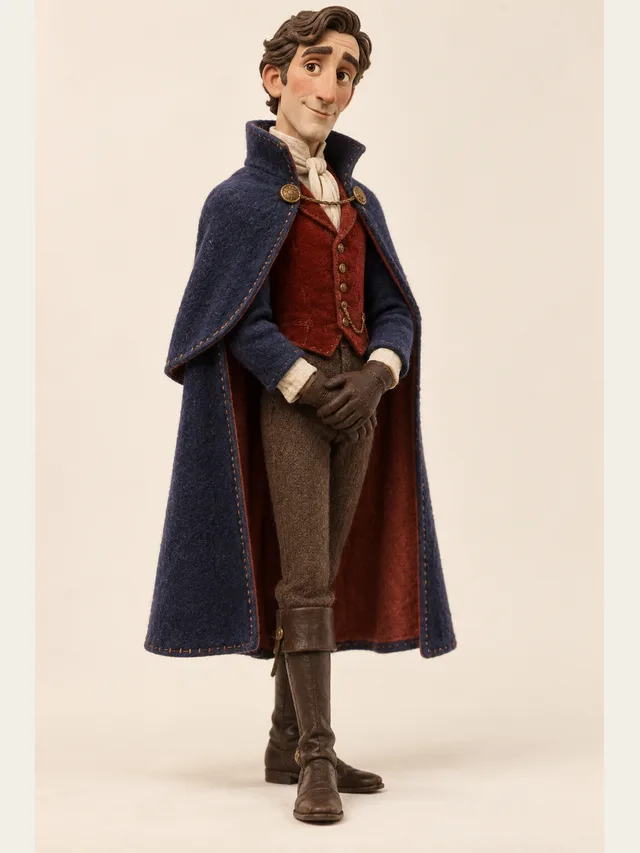
Ashford
Velvet-voiced villain who apologises before he ruins you
Voice category
The best villain voices are calm. Menace comes from certainty and from a delivery that does not match the content — not from volume, not from growl. Cast the antagonist against what they are saying and the scene does the frightening for you.
Ashford
Velvet-voiced villain who apologises before he ruins you

Vex
Negotiates reasonably, means none of it kindly

Seraphine
Court politeness used as a weapon

Morrow
Learned your name somehow and is in no hurry
Every voice is available on every plan — the library is not a paywall.
Ask anyone to perform a villain and they will get louder. It is the wrong instinct, and it is wrong for a structural reason: volume signals effort, and effort signals that the outcome is in doubt. A character who believes they have already won does not raise their voice, because there is nobody to convince. Everything that reads as menace — the unhurried delivery, the willingness to pause, the total absence of defensiveness — is a way of showing that certainty.
In practice this means the villain should be the slowest speaker in the scene. Not slow enough to sound sleepy, just slower than the people they are talking to, so the rhythm of the exchange keeps telling the audience who is in control. If you have line-level speed available, one step down is the whole trick. If you do not, write their sentences shorter and put full stops where you would have put commas.
The reliable casting move is to pick a voice that contradicts what the character is saying. A courteous, pleasant, faintly apologetic voice describing something monstrous forces the listener to notice the gap themselves, and a thing you noticed is always more disturbing than a thing you were told. A growl, by contrast, does all the work up front and leaves the audience nothing to do.
This is also why court and ceremonial voices work so well for antagonists. Politeness is a system of rules, and a villain who follows the rules exactly while doing something indefensible is a very old and very effective shape. The poised register carries it without any direction at all; you simply have to resist the urge to make the delivery sinister.
The exception is the moment of the reveal, when the character stops performing. That is where a rougher voice earns its place — but it is one line, or one scene, and it only works because of the forty lines of composure that came before it.
The writing constraint is simple and difficult: the villain must be right about something. Not right about the conclusion, but right about a fact, a grievance or a weakness in the hero that the audience has also noticed. That is what makes their scenes tense rather than merely unpleasant, and it gives the voice something to do besides sound bad.
Keep the sentences plain. Elaborate villain rhetoric is a trap in audio, because long subordinate clauses arrive as one flat unit and the listener loses the thread halfway through. Short declaratives, one idea each, with the worst idea placed last in the line — that is a structure a renderer performs well and a listener follows.
One habit worth adopting: never let the villain answer a question directly in the first line. Answering late is a power move in dialogue, it creates a natural pause, and it gives you somewhere to put the beat that makes the scene feel dangerous without any acting at all.
Every good antagonist scene has one line where the mask moves. Finding it is a writing decision, not a directing one: read the scene and mark the moment the villain is actually surprised, or actually insulted. That is the line that gets the emotion, and everything else stays neutral so the contrast has somewhere to land.
When you direct it, resist going to the top of the range. Cold fury — clipped, controlled, quieter than before — is a much better choice than rage for almost every antagonist, and it is a register that synthetic performance handles well. Genuine shouting is one of the places where the gap between a synthetic read and a human one is widest, so if your scene truly requires a scream, record that line yourself and let the rest of the cast carry the scene around it.
Finally, regenerate that line a few times before you settle. Each take is a fresh performance and the delivery varies slightly between them, so the version you want is usually two or three attempts away. The rest of the scene keeps the audio it already has; only the line you touched is rendered again.
Give them an argument the audience can almost follow. A villain who is simply cruel is a weather event; a villain with a position the listener has to actively refuse is a character. The voice can only perform what the writing gives it.
A warm or courteous voice saying something cruel outperforms a growl every time, because the audience has to do the work of noticing. Audition on the most horrifying line in the scene and keep whichever candidate makes it sound most ordinary.
Direct restraint almost everywhere. Per-line emotion control is a Pro feature; on other plans every line follows the character's default emotion, and for a villain, neutral is usually the right default anyway.
Villains are never in a hurry — that is where the authority comes from, because hurry implies someone else is setting the schedule. Line-level speed is on Plus and Pro, five steps between 0.75× and 1.25×; one step below your leads is plenty.
Menace is relational. Cast both sides and generate the exchange, not the villain's lines in isolation, so you can hear the imbalance: who interrupts, who waits, who is still speaking at the same speed after the threat.
Not necessarily. Certainty and pace matter more than pitch, and a mid-range voice with total composure is often more unsettling than a low one. There is no pitch control in any case, so if you want something lower you change the library character rather than processing the voice you have.
Specificity and calm. "I will destroy you" is abstract and easy to ignore; naming the exact thing you intend to take, in an ordinary tone, is not. Write the specific version and direct it neutrally, and the audience supplies all the dread you would otherwise have tried to act.
Cut the relish. Camp comes from a performer enjoying their own villainy, and in a synthetic read it shows up as over-directed emotion on every line. Direct most of the scene neutral, keep the sentence structure plain, and let one line — not eight — carry the pleasure.
No. Imitating an identifiable performer is prohibited, cloning is not open, and it is also the least interesting version of the character. The voices that stay with people are usually the ones nobody could name a reference for.
Deliberately, sometimes — it is a real device for doubles, possession and revelations. Otherwise avoid it. Within a project, characters are kept on different base voices until the pool for that gender runs out, and a project supports at most ten distinct voices before sharing becomes unavoidable, so keep the antagonist near the top of your cast list.
Yes, and it is the single most useful thing per-line direction is good for. Set the whole confrontation neutral and one line angry — cold fury rather than shouting — on Pro. If you are not on Pro, get the same effect by writing that line shorter than everything around it.
Paste a script, let CastDub assign a voice to every character, and export a finished drama.
Create for freeNo credit card. Free gives you a one-time pot of credits.