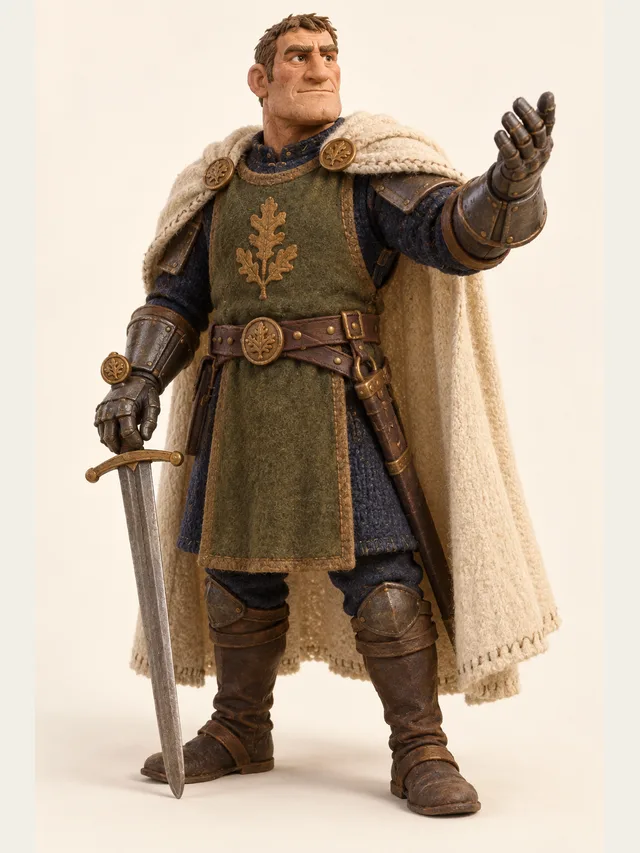
Torvald
Knight commander who gives orders that men actually follow
Voice category
A knight's voice is a command voice. It is not about depth; it is about certainty, unhurried pace, and the assumption of being obeyed — which is a writing decision at least as much as a casting one.
Torvald
Knight commander who gives orders that men actually follow
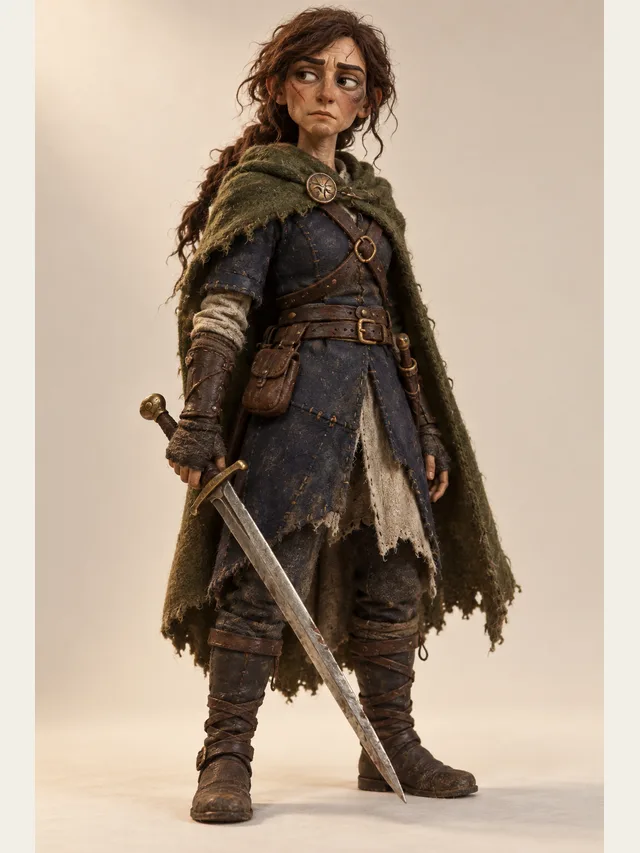
Kestrel
Weary swordswoman who has already lost this war once
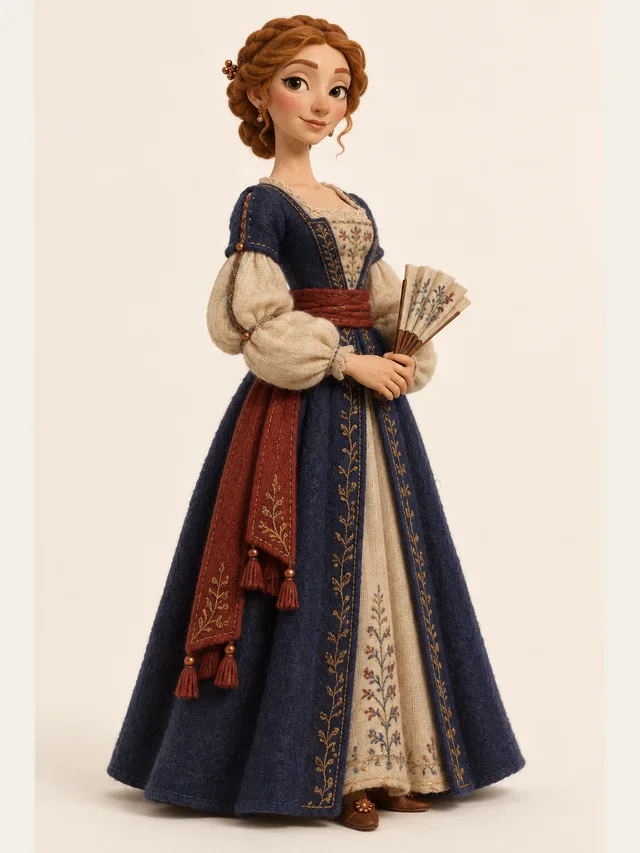
Seraphine
The one whose orders outrank his
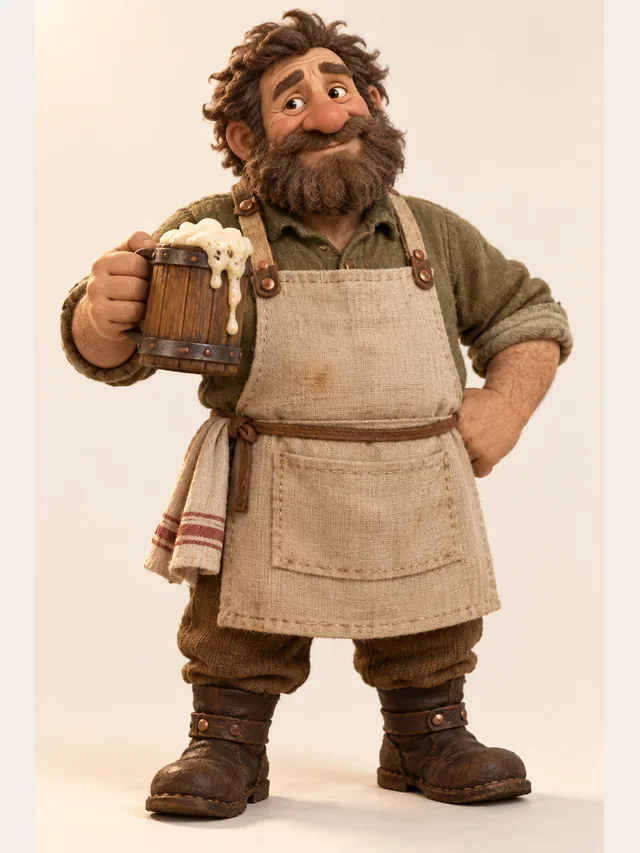
Bram
The veteran who trained half of them
Every voice is available on every plan — the library is not a paywall.
The reflex when casting a knight is to find the lowest voice available, and it is worth resisting. Real command reads through two things that have nothing to do with pitch: the speaker does not hurry, and the speaker does not justify. A mid-range voice that states what will happen and then stops carries more authority than a cavernous one that argues for it.
This is good news, because pitch is the one thing you cannot adjust. There is no pitch control; you select a library character and direct the performance. So the levers that matter are the ones you do have — pace, which is adjustable per line on Plus and Pro, and sentence construction, which is free and more powerful than either.
The practical test when auditioning: give each candidate the same three-word order and listen for whether you believe a room would go quiet. That is a much better filter than listening to a paragraph of description, where every voice in the library sounds broadly competent.
Orders and oaths are opposite kinds of formal speech, and knights need both. An order is verb-first, stripped of reasoning and complete in one breath: hold the line, take the left flank, put it down. The economy is the authority. Every word you add that explains why is a word that invites a discussion the character does not intend to have.
An oath is the opposite — deliberately redundant, structured in repeating clauses, and much slower. It works in audio because repetition creates expectation, and expectation gives the last clause somewhere to land. Write each clause as its own line so there is a genuine pause between them; the renderer inserts real silence between lines, and that silence is most of the ceremony.
The two registers should never blur. A commander who gives orders in oath language sounds pompous, and one who swears an oath in order language sounds as though they do not mean it. If a scene needs both, separate them clearly in time — the oath at the start of the campaign, the orders for the rest of it.
Battle scenes are the hardest thing on this page, for a reason that has nothing to do with knights: they are mostly non-verbal. Impacts, breathing, armour, shouting, the noise of a crowd — almost none of which is speech, and none of which the renderer will produce. It performs written lines, and a stage direction in brackets produces nothing at all.
So build the battle as layers. Generate the dialogue — the orders, the two-word responses, the one line somebody screams — and keep it clean. Everything else comes from a sound library or your own recordings, assembled in your editor. Stem export on Pro puts each character on a separate full-length track, which is what makes it possible to duck the dialogue under an impact without losing the words.
Then write far fewer lines than you think you need. A battle rendered as continuous dialogue becomes a meeting; a battle with eight short exchanges scattered across two minutes of sound design becomes a battle. The audience fills in everything you leave out, and they do it better than any voice could.
Nothing establishes rank faster than the shape of the answers. A soldier who repeats the order back, a lieutenant who asks one clarifying question, a rival who pauses before complying — each of those is a single short line, and together they build a hierarchy the listener understands without being told any of it.
That means casting downwards from the commander. Pick the command voice first, then choose answering voices that sit clearly apart from it in pace and pitch, so an order and its acknowledgement never blur. Within a project characters are automatically kept on different base voices until the pool for that gender runs out, which handles most of this for you; your job is the pacing.
Adding people later is safe. A character appended to the end of the cast does not shift the voices already assigned, so you can build the command structure first, confirm it sounds right, and bring in the rest of the unit afterwards without re-rendering any audio you have already approved.
Command language is short and declarative: the verb first, the reason omitted. Long rhetoric belongs to kings and to the night before the battle, not to the battle itself. A line that explains itself has already conceded that compliance is optional.
Audition candidates on an order rather than on a neutral sentence. The right voice is the one that sounds as though it expects to be obeyed, and that quality has almost nothing to do with pitch — plenty of mid-range voices carry it better than the deepest character in the library.
Authority is unhurried, and rushing undercuts every other choice you have made. Line-level speed is on Plus and Pro in five steps between 0.75× and 1.25×; one step below the soldiers around them is usually the entire adjustment.
One raised line in a battle scene lands; a whole scene of shouting exhausts the listener and flattens the dynamics. Shouting is also where synthetic performance is weakest, so if the moment genuinely needs a scream, record that single line yourself.
Commands need somebody to receive them. Cast the soldiers as well and generate the exchange together, because the answering voices are what establish rank — a commander alone is just a person with strong opinions about terrain.
No. It is a genre convention in English-language fantasy rather than a requirement, and breaking it deliberately can be very effective. You cannot select an accent in any case: in English a library character arrives with a British, American or Australian delivery as part of the character, and in the other eight languages there is one general standard form with no regional option.
Short clauses, repeated structure, and a pause before the last one. Ritual language is carried by structure far more than by delivery, and the repetition gives a synthetic performance a rhythm it can hold. Put each clause on its own line so the pauses are real rather than implied.
Not necessarily, and there is no pitch control to make one deeper. Certainty and pace carry command; depth mostly costs you intelligibility, which matters a great deal in a scene with background noise. If you want more weight, change to a character who already has it rather than looking for a setting.
Cast the three or four people who have names and write everyone else as a single unit character delivering short shouted fragments. A project supports at most ten distinct base voices, so spending them on interchangeable soldiers is a waste — and a layered crowd track built from stems sounds more like an army than ten individual voices do.
They should. Rank is comparative, and a commander who is used to being obeyed becomes far more interesting the moment somebody outranks them. Generate both halves together so you can hear the shift in who waits for whom; that shift is the scene.
Change the pace, not the volume. Defeat in a command voice sounds like someone still giving orders at the same speed while explaining slightly more than they used to. Write in one or two justifications that the earlier version of the character would never have offered, and the audience hears the collapse without any direction at all.
Paste a script, let CastDub assign a voice to every character, and export a finished drama.
Create for freeNo credit card. Free gives you a one-time pot of credits.